



Colors of Golden Retriever Dogs
Golden retriever dogs are known for their beautiful coats and friendly personalities. When you search for colors of golden retriever dogs, you’ll find variations in their fur shade from very pale to deep golden. This isn’t random. Coat color comes from genetics, and it matters for shows, grooming, and understanding your dog better.
Main Coat Colors Recognized in the US
The American Kennel Club (AKC) accepts exactly three primary coat colors for golden retrievers:
- Light Golden – A pale shade that can seem almost cream in some light.
- Golden – What most people picture when they think of this breed.
- Dark Golden – A deeper, richer shade of gold.
These are the only colors you’ll see in AKC conformation shows. They still vary a bit, but they fall under these three categories. Spectrums from cream to dark are natural, but AKC focuses on the golden scale.
Variations You Might See
Breeders and owners use names for shades outside the strict AKC list, but these are not separate colors in the official standard.
- Cream or very pale gold – Often called “English Cream.” It’s simply a light golden retriever.
- Red or Deep Mahogany – Appears darker, sometimes with reddish tones. Not an AKC official color, but seen in the field.
- Very Pale or Very Dark Extremes – Some dogs may look nearly white or very red, but these are extreme ends, not separate recognized types.
These variations happen because of how pigment intensity works in the dog’s genes. All golden retrievers produce only one pigment type in their coat. The amount of that pigment changes how light or dark the coat looks.
How Coat Color Changes From Puppy to Adult
Here’s the thing: a puppy’s coat is not its final adult shade. Puppies often start lighter. As they grow, their coat may darken or stay light, depending on their genetic traits. Most retrievers reach their adult color by about 12 to 18 months. Some subtle shifts continue after that, but the big change happens in the first year.
This means you should expect variation and not judge final color too early. Look at ear and tail tips for clues, but give it time to settle.

Why Golden Retrievers Can’t Be Other Colors
Golden retriever dogs are genetically restricted to shades of gold and cream. They carry genes that stop black or brown pigment from showing in their coat. This is why you never see purebred goldens in colors like black or chocolate. The gene for black/brown just isn’t expressed in this breed.
That simplifies things: no black, blue, lilac, or brindle coat is possible in purebred golden retrievers.
Practical Care Tips Based on Color
Your dog’s coat color can affect daily life a bit, even if it doesn’t change overall health or personality.
Grooming:
- Lighter coats show stains more easily.
- Darker coats sometimes hide shed hair on light floors.
Sun and Dirt:
- Light fur may look bleached in bright sun.
- Dark coats may show dust or pollen more after outdoor play.
These are small details, but they matter if you care about how your dog looks and how often you groom.
Common Misunderstandings About Coat Colors
Many people think some colors are rare, better, or linked to temperament. That’s just not true. Color does not predict personality, intelligence, or health.

Myth: “English Cream Golden Retrievers are rarer or stronger.”
Truth: It’s just a light-colored golden retriever, and in the US, the AKC doesn’t recognize “cream” as a separate official color.
Myth: “Red goldens are healthier or more valuable.”
Truth: Color has no proven link to general health. What matters most is good breeding and proper health testing.
Quick Reference: Golden Retriever Color Chart
| Shade | AKC Recognized? | Notes |
| Light Golden | Yes | Pale, can appear cream |
| Golden | Yes | Classic medium gold |
| Dark Golden | Yes | Deep gold, rich hue |
| Cream | No | Very pale gold, common name |
| Red | No | Rich, deeper color tones |
This chart gives you a clear picture of what’s accepted and what’s just a descriptive name people use.
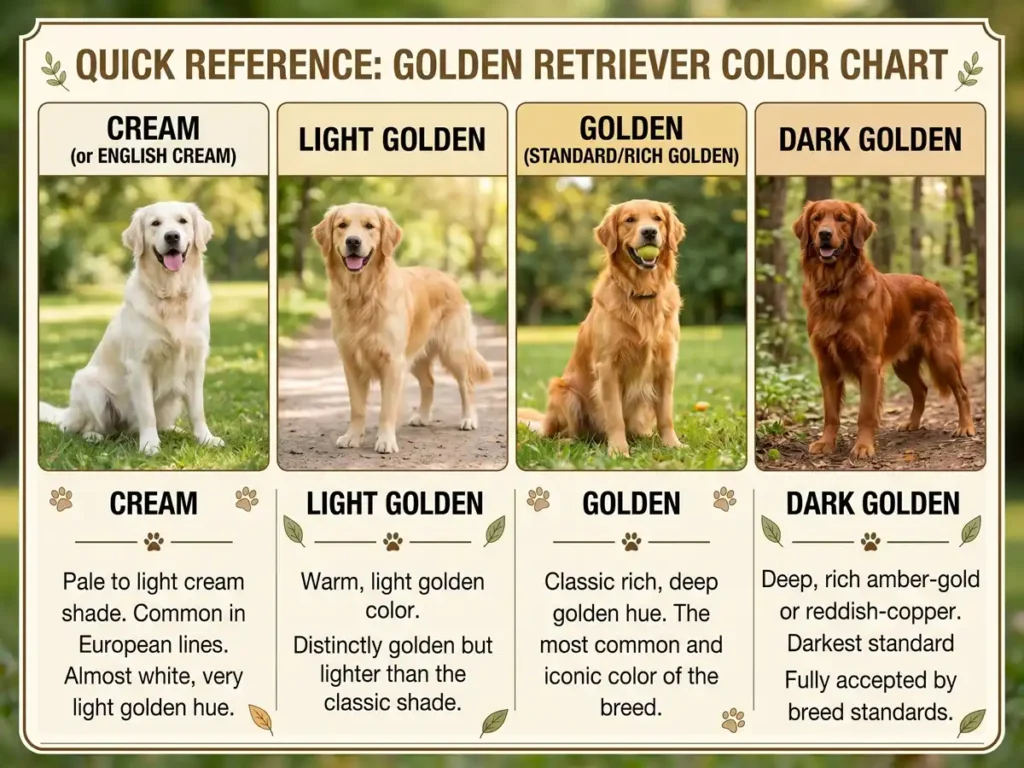
Summary
Golden retriever coat colors range from light golden to dark golden. The only official US recognition is for light golden, golden, and dark golden. Variations like cream or red are interesting to pet owners, but do not carry different breed status.
Your dog’s coat color will likely evolve as they age, and the final shade usually settles by the end of the first year. Color doesn’t determine how good a dog is, but knowing the differences helps you understand your retriever better.
Golden Retrievers in the UK are accepted in a range of gold and cream shades. The Kennel Club lets cream, light golden, golden, and some deeper golden coats compete in shows. UK standards treat cream-colored dogs as valid, not separate breeds. Any solid colour outside gold or cream, such as black or spotted patterns, isn’t standard.
Puppies often start with very pale fur that changes as they grow. Most retrievers have lighter coats at birth, and pigment deepens over months. By about 12–18 months, the adult shade usually settles. This shift happens because the hair shaft fills with more pigment as the dog matures, so light pups can become mid-golden or even darker adults.
Strictly speaking, no. Very pale coats may look almost white, but true white is not an accepted colour under the UK standard. Extremely dark coats with red or fox‑red tones are often just deep golden shades and may not be accepted in shows if they stray too far from the typical golden spectrum. The Kennel Club criteria focus on lustrous gold through cream, not true white or red coats.
No. Coat color does not influence temperament, intelligence, or fitness. Whether a Golden Retriever is cream, light golden, standard golden, or dark golden, character and health depend on breeding quality and care, not the shade of their coat. People sometimes assume red or cream dogs are better or rare, but cosmetics aren’t linked to behavior or well-being.
Goldens aren’t limited to single names — they fall along a colour spectrum from cream to deep gold. In the UK, standard shades include cream, light golden, mid‑golden, and darker golden hues. Subtle variations exist within these, but all still count as golden family colours. Shades outside this range, like pure white or black, are not part of the breed standard.
