


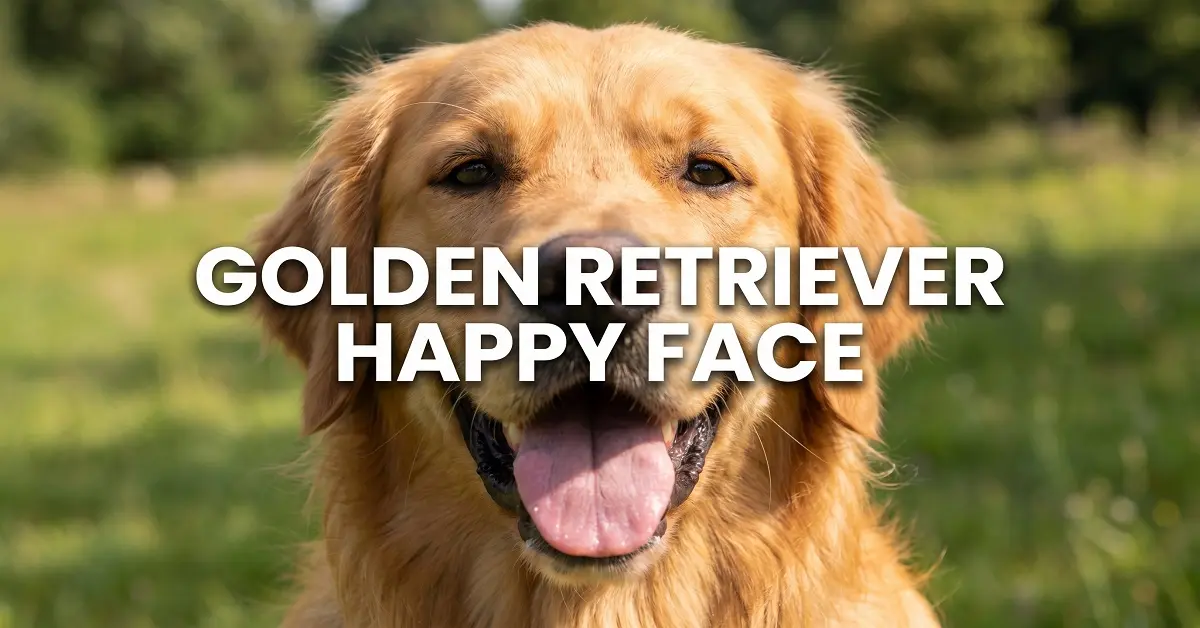
A golden retriever’s happy face stands out right away. The soft eyes, open mouth, and relaxed cheeks make this breed look cheerful even during quiet moments. That is why many owners ask if a golden retriever is truly smiling or if the face naturally looks friendly. Here’s the key point: both things are true. A golden retriever has facial features that convey a warm expression, and this breed usually remains socially relaxed around people.
Because of that, the face often matches the mood. Many dog owners also notice that the same happy expression appears during greeting time, play, feeding, and calm rest. Yet the face changes in small ways depending on mood, comfort, and environment.
Why Golden Retrievers Naturally Look Happy
A golden retriever often looks cheerful because of its facial structure. The mouth line usually curves slightly upward. Even when the dog is resting, that line can look like a smile. The eyes also matter. Soft eyes with low tension create a gentle look. When the eyelids stay relaxed, the whole face appears calm.
Then the cheeks complete the expression. Loose facial muscles make the mouth and eyes look open and friendly. This breed also has a calm social pattern. Since golden retrievers were developed to work closely with people, facial softness often appears during normal human contact.

What a Real Happy Golden Retriever’s Face Looks Like
A truly happy dog shows several signals at once.
| Facial Sign | What It Usually Means |
| Open mouth | Comfort and ease |
| Tongue slightly out | Light excitement or play |
| Calm eyes | Trust and safety |
| Loose ears | Relaxed mood |
A happy golden retriever usually breathes evenly. The lips stay loose. The eyes blink naturally. At the same time, the body supports the face. A relaxed tail, easy posture, and steady movement usually confirm comfort. This same face often appears after outdoor play, during family time, and while waiting for attention.
Happy Face vs Stress Face in Golden Retrievers
A smiling face can look similar to a stressed face if you only watch the mouth. That is why full facial reading matters.
| Happy Face | Stress Face |
| Soft eyes | Wide eyes |
| Loose mouth | Tight lips |
| Calm breathing | Fast panting |
| Natural ears | Ears pulled back |
Stress usually changes the mouth corners first. The lips tighten. Breathing speeds up. Eye shape becomes sharper. Some dogs also lick their lips, yawn often, or avoid eye contact. This is where many owners get confused because stress can still look like smiling at first.

Why Golden Retrievers Smile More Than Many Other Dogs
Golden retrievers often look more sensitive than many breeds because of nature. They seek eye contact often. They react quickly to voice tone. They also watch human movement closely. That strong human bond shapes facial response every day. A simple greeting, soft praise, or reaching for a leash can change the face within seconds. Because this breed learns social patterns fast, facial softness appears often during daily routines.
Science Behind Dog Facial Expressions
Research from the University of Portsmouth found that dogs make more facial movements when humans are looking at them. The study showed that dogs changed facial expression more during human attention than during food presentation. That matters because it suggests facial movement works as communication.
Researchers also found one repeated movement: inner eyebrow lifting. This makes the eyes appear larger and softer. That same soft-eye look is common in golden retrievers during direct eye contact. So while emotion matters, attention from humans also shapes the face.

Do Golden Retrievers Smile on Purpose
Part of the expression becomes learnt over time. A dog notices owner reactions very quickly. If praise follows a soft open-mouth expression, that face often returns. This creates a learned response. Reward memory also matters. Walks, treats, and touch build strong links. That is why many golden retrievers show a smiling face before a walk even starts. They connect the moment with something positive.
What Your Golden Retriever Face Says About Mood
Mood changes the face in small but clear ways.
Excited
The mouth opens wider. The eyes brighten. Breathing becomes quicker.
Calm
The mouth stays loose. The eyes remain soft. The ears rest naturally.
Playful
The face stays open, but movement increases. The dog watches closely and often adds playful body signals.
Nervous
The lips tighten. Eyewhites may show. The ears move back. Small changes matter more than owners expect.
When a Smile Can Mean Something Is Wrong
A smiling look does not always mean comfort.
Pain signs
Pain often reduces normal softness. The dog may blink less, avoid touch, or hold the mouth differently.
Stress signs
Repeated lip licking, shallow panting, and tension near the mouth often signal discomfort.
Heat signs
Heavy panting, a long tongue, and slow recovery after exercise often point to heat load. This section matters because many owners mistake overheating for happiness.
Why Golden Retriever Puppies Show Different Facial Expressions
Puppies show faster facial shifts because their reactions change quickly. Their eyes often look wider. Their cheeks appear fuller. Their expressions move fast between curiosity and caution. As they grow, daily reward patterns shape clearer adult expressions. That is why the classic golden retriever’s happy face becomes stronger with age.

FAQ
Why does my golden retriever smile when I come home?
Your return triggers reward memory, excitement, and social comfort.
Is panting the same as smiling?
No. Panting helps with cooling. Smiling usually comes with softer eyes and relaxed breathing.
Why do golden retrievers look friendly?
Their face shape and calm social nature create that effect.
Can dogs copy human smiles?
Dogs do not copy smiles exactly, but they respond strongly to human facial attention and tone.
Final Thought
The golden retriever’s happy face is a mix of anatomy, mood, memory, and human connection. That is why the same dog can look cheerful during rest, greeting, and play.
Still, the face tells the full story only when you watch the eyes, mouth, ears, and breathing together.
