



Purebred dogs come with an encyclopedic set of guidelines that continues to evolve; however, once in a while, an unusual variation stands out from the common mold and captures everyone’s attention. Such is the case with the black golden retriever dog.
Melding the tender, polite nature of the Golden Retriever with an uncommon, luscious black coat, this canine has garnered wide attention across the world. This wonderful dog exists within a unique space at a crossroads of genetic science and popular naming conventions.
The following in-depth article explores the truth, the genetics, the care, and the overall appeal of this black-coated retriever, often referred to as the rare black golden retriever.
We will provide prospective owners and enthusiasts with a definitive guide, from understanding their true lineage to mastering the specific black golden retriever grooming needs, in a search engine-friendly piece that will be beneficial for anyone interested in welcoming this hidden gem among dogs into their home.
Learn About Red Golden Retriever
Unmasking the Identity: Are Black Golden Retrievers Real?
The first and most crucial question is fundamental: Are golden retrievers real? The answer is complicated and hinges entirely upon the definition of “Golden Retriever.”
The Genetic Reality and Breed Standards:
Major international kennel clubs, such as the American Kennel Club and The Kennel Club (UK), only recognize shades of gold and cream for the purebred Golden Retriever. A black color is considered a disqualification because this is a strict rule rooted in the black golden retriever genetics:
The golden color is a result of recessive genes ($e/e$ at the E Locus) that prevent the expression of black pigment-eumelanin-in the coat and show only the red/yellow pigment, phaeomelanin, which results in the various golden hues.
Therefore, a purebred Golden Retriever cannot genetically carry a solid black coat color. If a dog is presented as a breed of black golden retriever, it can be from one of two main categories:
Learn About English Cream Golden Retriever
The Flat-Coated Retriever:
This is a different, acknowledged retriever breed that shares a common history and gentle black golden retriever temperament with the Golden. The Flat-Coated Retriever naturally comes in solid black or liver.
Because of its resemblance to a Golden in build and feathering, it is the most common dog mistaken for a black retriever full-grown.
The Black Golden Retriever Mix:
This is the most prevalent form of the so-called black Golden. It results from crossing a Golden Retriever with another black-coated breed, usually a Black Labrador Retriever (creating a “Goldador”) or sometimes a Flat-Coated Retriever.
The dominant gene for black color from the non-Golden parent successfully overrides the Golden’s recessive coat gene, resulting in a black retriever puppy that inherits the physical traits and personality of both parent breeds.
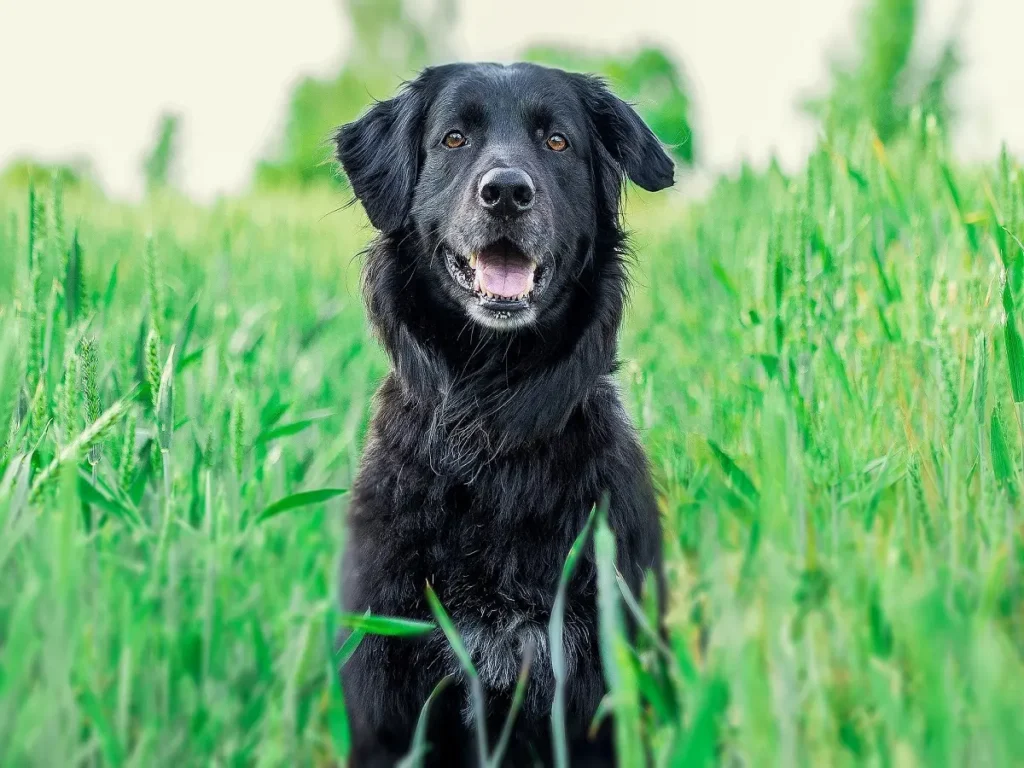
This explains why some golden retrievers are black:
It is mostly because of a mixed breed or the presence of the distinctive Flat-Coated Retriever. It is important to ensure that responsible buyers understand this to avoid uninformed buys from unscrupulous sellers of mixed breeds as rare black retrievers for inflated black golden retriever prices.
Black Golden Retriever Genetics and Lineage: Taking an In-Depth Look
To fully appreciate the black variant, one must understand the genetic interplay involved in allowing its manifestation.
The $E$ Locus and Color Inheritance:
The root of the matter is at the E Locus (Extension), which dictates whether black pigment extends to the coat. The standard Golden Retriever is $e/e$, meaning it cannot express black pigment on the coat, regardless of the genes for pigment production it carries elsewhere.
The black retriever mix, on the other hand, inherits a dominant $E$ gene from the non-Golden parent. This means it carries the genotype $E/E$ or $E/e$. This allows the black color to be fully expressed in the black golden retriever coat color.
This mixed heritage often means the dog retains the beautiful feathering and longer coat texture of the Golden side, distinguishing them visibly from the short, dense coat of a Black Labrador. For this reason, the black Retriever is highly attractive to those who love the looks of the Goldens but prefer a dark color.
Black Golden Retriever vs Labrador: What’s the Difference?
The black retriever vs Labrador comparison is crucial. Even though both are loyal, intelligent retrievers, they do differ in both looks and energy:
Feature: Black Golden Retriever Mix/Flat-Coat Black Labrador retriever.
Coat Medium-to-long: Often wavy; feathering on legs, tail, and chest pronounced. Short, dense, straight; little feathering; ‘otter’ tail.
Build: Leaner, more angular, and athletic in build; head is wedge-shaped. More blocky, heavy-set, and robust; wide head and muzzle.
Energy High, but often more composed and less manic than a young Lab. Extremely high; known for boisterous, puppy-like enthusiasm well into adulthood. Grooming High-maintenance; extensive, regular brushing required. Low-maintenance; a little weekly brushing suffices.

The Captivating Black Golden Retriever Temperament:
The primary reason this black-coated dog is such a hidden gem is that it successfully retains the beloved black golden retriever personality traits. This is a testament to the powerful, positive influence of the Golden Retriever and Flat-Coated Retriever lineage.
Sociability and Affection:
The black retriever temperament is predominantly highlighted by its friendly, gentle, and highly social nature. They relish human companionship and are known for their deep loyalty.
They are patient with children, will usually get along well with other pets, and many exhibit that “Velcro dog” quality-always wanting to be near their family. This makes them superb family pets and excellent candidates for therapy.
Intelligence and Trainability:
Like all retrievers, the black variety is intelligent and keen to please. This makes black golden retriever training tips simple and very successful. They learn fast and listen excellently with positive reinforcement training.
For how to train a black golden retriever puppy, it is very important to make sure consistency and regularity are established from the early days. They want to work and learn means they excel not just in basic obedience but also in competitive sports like agility, fly ball, and advanced retrieving tasks.
Complete Black Golden Retriever Care Guide:
After all, bringing any dog into your life is a long-term commitment. A detailed black retriever care guide is a must for this striking companion to enjoy a long, healthy, and happy black golden retriever lifespan.
Exercise Requirements:
A black golden retriever full-grown has a high energy level; they require at least 60-90 minutes of hard daily exercise. This should not be limited to just walking. As working retrievers, they require as much mental stimulation as they do physical activity.
Daily Activities: Long walks, structured playtime, and most importantly, fetching games are in order. Swimming is especially favored, leveraging their water-retrieving heritage.
Mental Engagement: With high intelligence, puzzle toys, interactive feeders, and short and frequent training sessions keep them satisfied so that they do not grow bored and develop destructive behavior.
Grooming Needs:
The beautiful black golden retriever coat color demands dedication with respect to maintaining its sheen and health. Building a good black golden retriever grooming routine is not optional.
Brushing: With its dense double coat and feathering, this dog should be thoroughly brushed 2-3 times a week but up to daily when shedding heavily, which typically occurs during seasonal shedding in spring and fall. High-quality slicker brushes and undercoat rakes are a must-have for handling such heavy shedding.
Bathing: Baths every 4-8 weeks, depending on activity level, using a conditioning shampoo will help the black coat look sleek and glossy.
Routine Checks: Cleaning of the pendant ears should be done routinely to avoid moisture accumulation, leading to infection.
Best Diet and Nutrition:
The best diet for black golden retriever dogs should support their active life and large-breed framework.
Quality Food: Use a high quality, premium commercial diet (kibble, raw, or mixed) as the core; ensure it is AAFCO compliant. Emphasize high-protein, complex-carbohydrate formulas to provide energy.
Joint Support: Due to the predisposition to joint issues, many owners and veterinarians recommend supplements containing glucosamine and chondroitin, which are crucial in long-term care for the joints.
Portion Control: Retrievers are notorious for their love of food, which puts them at a greater risk for obesity. Therefore, being very careful with the amount of food they eat and not overdoing it with treats is important.
Health Considerations and Longevity:
The black golden retriever’s lifespan usually ranges from 10 to 12 years. Being a cross/closely related breed, they are prone to potential black golden retriever health issues that are common to Golden Retrievers and Labradors.
Joint Conditions: Hip and Elbow Dysplasia are major concerns. Responsible breeders of the mix or the Flat-Coated Retriever will have OFA (Orthopedic Foundation for Animals) testing on parent dogs.
Cancer: Regrettably, Golden Retrievers are very prone to certain types of cancer, such as hemangiosarcoma and lymphoma. Though many times unavoidable, regular check-ups with the vet will help in early detection.
Cardiac Health: Issues regarding Subvalvular Aortic Stenosis (SAS), a heart condition, are a concern. Annual check-ups should include a thorough cardiac examination.
Eye Problems: There are eye conditions affecting vision, including cataracts and progressive retinal atrophy.
Choosing a puppy from parents with full health clearances is the single most important step an owner can take in mitigating the risk of these black golden retriever facts.
Training and Socialization: Raising a Well-Adjusted Companion
The intelligence and pleasing nature make for a joy in training, but early consistent training is needed to reinforce control over the dog’s strength and enthusiasm.
Preparation Regarding Puppy Training:
Where to start: How to train a black golden retriever puppy involves immediate, focused socialization.
Positive Socialization: Provide the black golden retriever puppy with controlled, positive exposure to people, noise, environments, and other animals before they reach 16 weeks of age.
Crate Training: This utilizes their natural den instinct and is invaluable for house training and managing the puppy’s chewing habits, which can be intense.
Obedience Foundation: Engage the dog in basic commands like Sit, Stay, and Come using high-value rewards. Short, consistent, and fun sessions are most effective.
Advanced Black: Golden Retriever Training Tips with their black golden retriever characteristics of being loyal and focused, these dogs do well when a purpose is given to them.
Leash Manners: They can be strong pullers. Teaching a structured heel and using front-clip harnesses or head halters can aid in preventing pulling on walks.
Harness Focus: Utilize their natural drive to your advantage: advanced retrieving games and nose work incorporated into a daily routine provide superior mental stimulation.
Getting Your Black Golden Retriever:
Cost, Adoption, and Responsible Sourcing: Finding a black-coated retriever involves ethical sourcing with a clear understanding of the difference between a mixed breed and a purebred Flat-Coat. Where to Buy a Black Golden Retriever.
Given that a purebred black Golden Retriever is genetically impossible, the search for a black Golden Retriever for sale should lead you to one of two places:
Flat-Coated Retriever Breeders:
If you desire a purebred dog that meets the look and temperament, search for reputable breeders of Flat-Coated Retrievers. These breeders will provide full health clearances and registration papers. The
Black golden retriever price for a high-quality Flat-Coat puppy typically ranges from $1,500 to $3,000 USD or more, which reflects the cost of genetic testing and responsible breeding practices.
Reputable Mixed-Breed Breeders:
If you are seeking a Goldador (Lab/Golden mix) specifically, make sure the breeder health screens both parent breeds. Avoid breeders using the description rare black golden retriever as an excuse to charge more money without health testing of some kind.
Black Golden Retriever Adoption and Rescue Organizations. Adoption is a great way to find an adult or older black golden retriever mix or Flat-Coat. There may not be specific black golden retriever rescue organizations, but here are some excellent resources:
Flat-Coated Retriever Rescue:
Breed-specific rescues often have black dogs looking for homes.
All-Retriever Rescues: These organizations frequently accept mixes and purebred dogs that are surrendered from various situations. The adoption fees of a black golden retriever are pretty low compared to buying from breeders, which can range from $250 to $500, and it usually covers spay/neuter, vaccination, and microchipping.
Conclusion:
The Timeless Appeal of the Black Golden Retriever The black golden retriever dog still remains a figure of intrigue, a striking variation that celebrates the best traits of the retriever family. Whether you welcome a Flat-Coated Retriever or a charming black golden retriever mix.
You choose a companion famous for its profound loyalty, boundless energy, and unparalleled gentleness. Understanding that the color of a black golden retriever is a genetic marker of its mixed or Flat-Coated lineage allows for responsible ownership.
By committing to the appropriate training, extensive grooming, and attentive health monitoring, the owner of this beautiful, dark-coated dog will be rewarded with an affectionate, intelligent, and enduring presence.
This unique canine, regardless of its official name, is indeed a cherished and hidden gem among dogs. Research and provide the name of some specific Flat-Coated Retriever rescue organizations in key regions that may help with the process of black golden retriever adoption.
FAQs?
What Makes Black Golden Retrievers Unique?
Why Should You Consider Adopting a Black Golden Retriever?
When Is the Best Time to Get a Black Golden Retriever?
Where to Find a Black Golden Retriever for Adoption?
You can acquire a Black Golden Retriever through adoption from rescue organizations, good breeders, or clubs for Golden Retrievers. Always go for sources that are ethical, with an emphasis on health, temperament, and responsible breeding.
